Coding Camps for Kids: The Best Live Online Programs in the UK
Coding is one of the most valuable skills a child can build today, whether they end up designing games, building apps, or just learning to think in a more structured, logical way. For parents across the UK, the challenge isn't finding interest in coding camps for kids, it's finding a program that's genuinely well-taught, age-appropriate, and worth the time investment.
This guide breaks down what a great coding camp for kids should actually include, walks through Imagine STEM Academy's live online tracks by age and skill level, and shows you exactly how to try a class before committing to anything.
What Makes a Great Coding Camp for Kids
Not every "coding camp" delivers the same experience. Before choosing one, it's worth knowing what separates a strong program from a weak one:
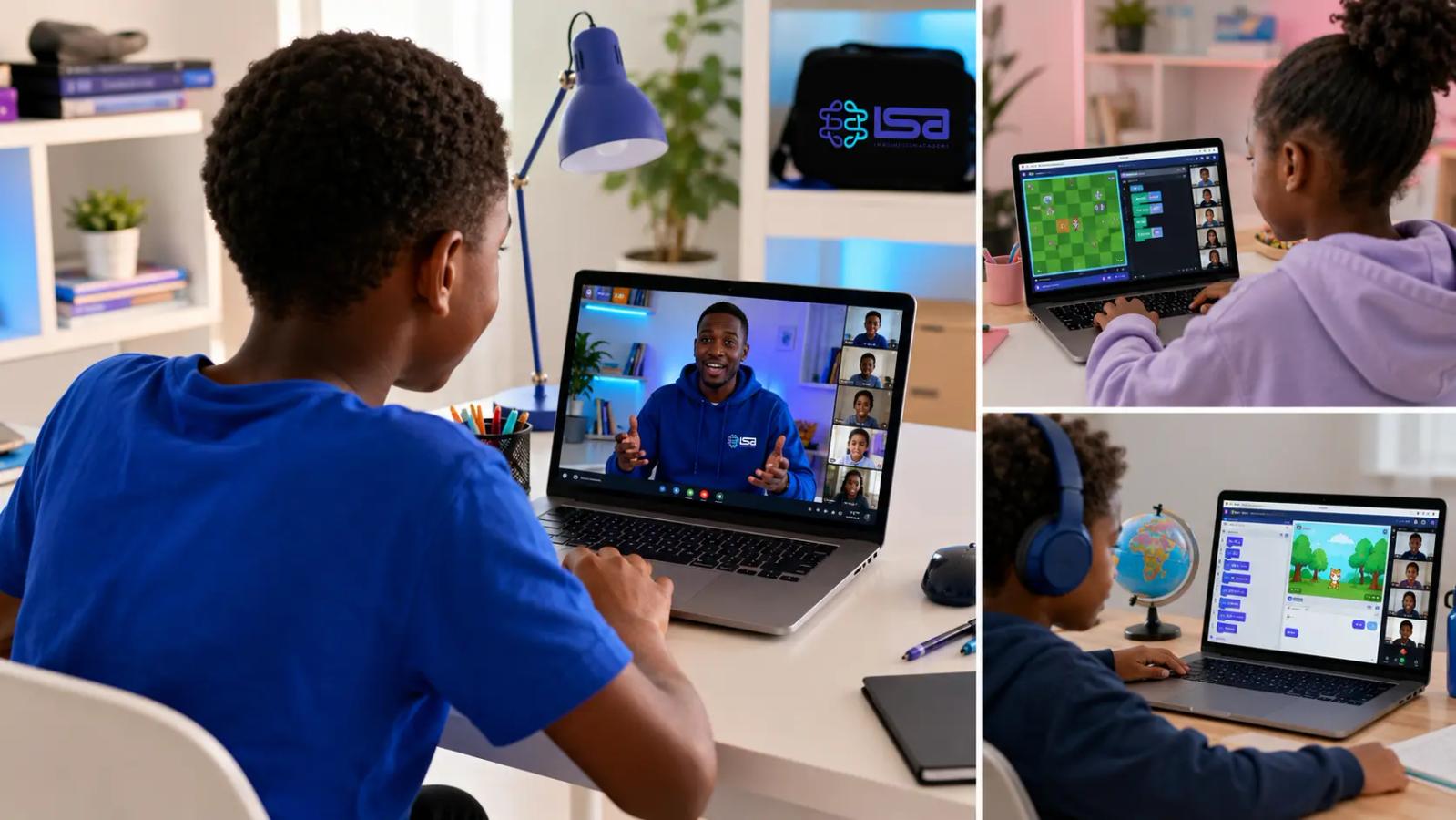
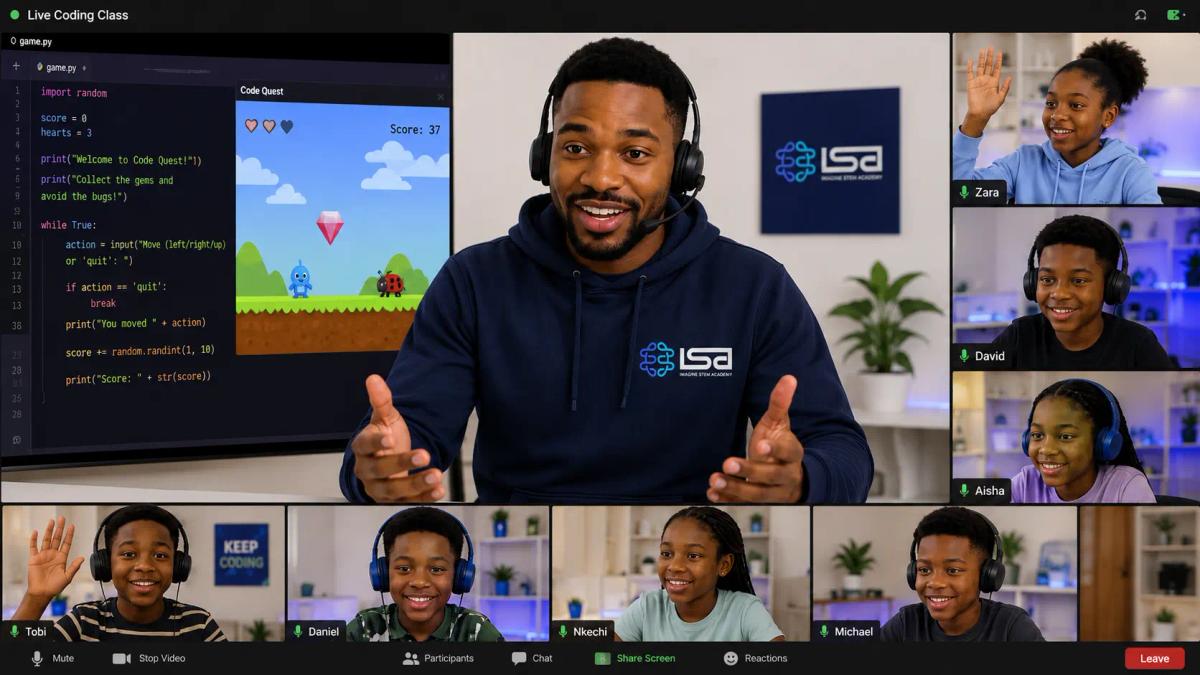
- Live instruction, not pre-recorded videos. Kids need to ask questions in real time and get unstuck immediately, that's where actual learning happens.
- Small class sizes. A ratio of roughly 1 instructor to 5 students or fewer means kids get real attention instead of getting lost in a large group.
- A real curriculum path, not a one-off session, from visual, block-based coding (Scratch) through to text-based languages (Python) as skills develop.
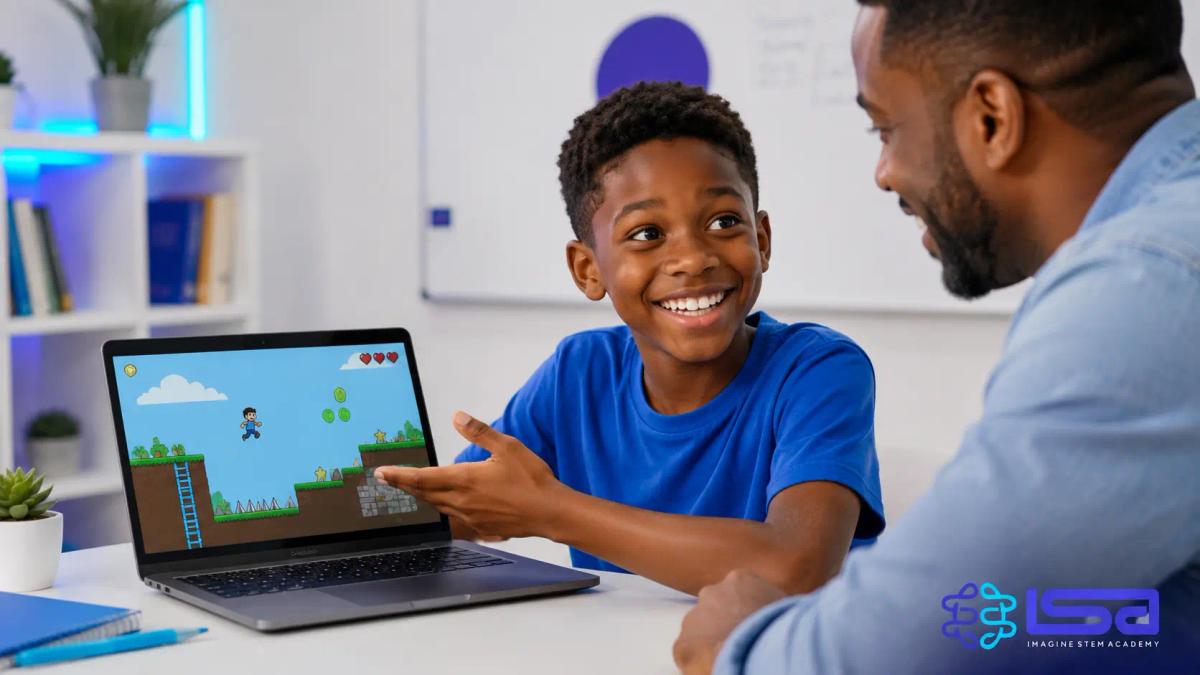
- Hands-on projects, not just theory, kids should leave each session having built something: a game, an animation, a working app.
- A free trial, so you can see the teaching style and your child's engagement before paying for anything.
Imagine STEM Academy's Coding Camps, by Age & Track
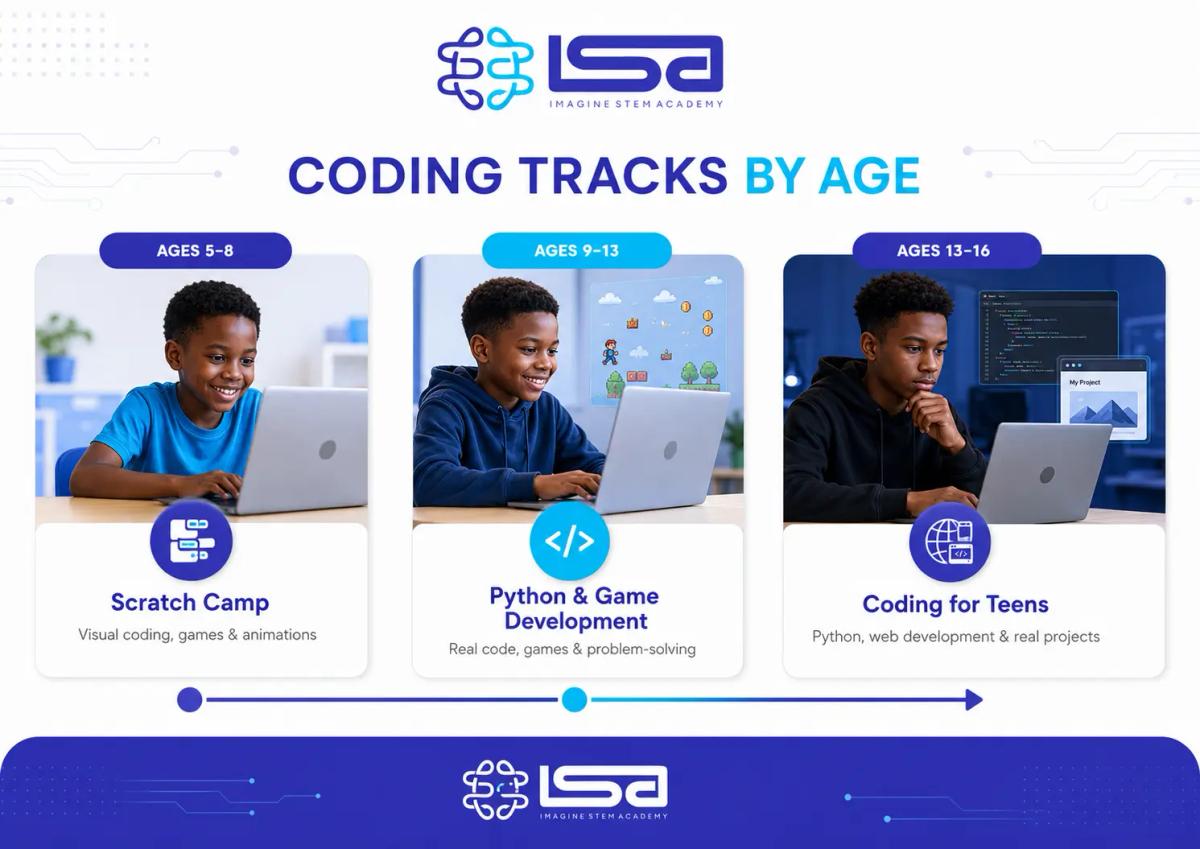
Imagine STEM Academy (ISA) runs live, instructor-led coding camps for kids aged 5–16, structured as a clear progression rather than a single one-size-fits-all class.
Scratch Camp (Ages 5–8)
Kids build their first games and animations using drag-and-drop, visual programming blocks, no typing or syntax required. This is the entry point for young beginners and focuses on making coding feel like creative play.
Python Camp (Ages 9–12)
Once kids are ready to move from visual blocks to real code, our Python track introduces text-based programming through practical projects, building simple games, automating tasks, and getting comfortable with real syntax.
Game Development Track
For kids who are motivated by games specifically, this track goes deeper into game logic, character design, and interactive mechanics, a strong option for engaged gamers who want to build, not just play.
Robotics & Computational Thinking
Coding paired with robotics concepts, helping kids apply programming logic to physical, hands-on problem-solving. See our related guide on robotics for kids
Coding for Teens (Ages 13–16)
A faster-paced track for older beginners and intermediate learners, covering Python and introductory web development, with an eye toward the kind of skills relevant to future study or careers in tech.
Not sure which track fits your child? See our camp schedules page →
Small Group vs. 1:1 — Which Should You Choose?
- Small group classes (recommended for most kids) offer live peer interaction, a collaborative feel, and a lower cost per session ideal for kids who enjoy learning alongside others.
- 1:1 sessions offer fully personalized pacing and attention, a strong option for kids who need extra support, have a very specific interest, or prefer one-on-one focus.
How to Choose the Right Coding Camp for Your Child
- Match the track to their interest: a child who loves games will engage more with our Game Development track than a general Python class, for example.
- Try before you commit. A free trial class tells you far more than any description can, you'll see the teaching style, the pacing, and whether your child is genuinely engaged.
- Check the group size. Ask directly how many students are typically in a live session.
- Look for a real project outcome, not just "lessons" - ask what your child will have actually built by the end of the camp.
- Confirm the schedule works for your family: weekday, weekend, evening, or school-holiday intensive options should fit around your routine, not the other way around.
Frequently Asked Questions
What age should kids start learning to code? Most kids can start as early as 5–7 years old using visual, block-based tools like Scratch. By ages 9–12, many are ready to move into text-based languages like Python.
Is Python or Scratch better for beginners? Scratch is the best starting point for younger children (roughly ages 5–10) because of its visual, drag-and-drop format. Python suits kids around age 10+ who are ready for real-world, text-based programming.
How much do coding camps for kids cost? Monthly classes starts from $150, while daily classes (A more flexible plan) costs $10 per session of 1 hour 30 Minutes. free trials are available for the weekend/after school programs.
Are coding camps worth it for kids? Yes beyond the technical skill itself, coding builds problem-solving, logical thinking, and creativity, all of which carry over well beyond any specific programming language a child learns.
Do you offer a free trial class? Yes. You can book a free trial coding class before committing to a full program, so your child can experience a live session and you can see if it's the right fit.
Book Your Child's Free Trial Coding Class