Best Coding Languages for Kids: Scratch, Python & More Explained
Best Coding Languages for Kids: Scratch, Python & More Explained
"Which coding language should my child learn first?" is one of the most common questions parents ask once they've decided coding is worth pursuing — and it's a good question to ask, because starting with the wrong one can turn a curious kid off the whole subject. The good news: the answer mostly comes down to age and experience, not personal preference. This guide breaks it down clearly.
Not sure where your child fits? Book a free trial class and we'll help you choose →
The Short Answer
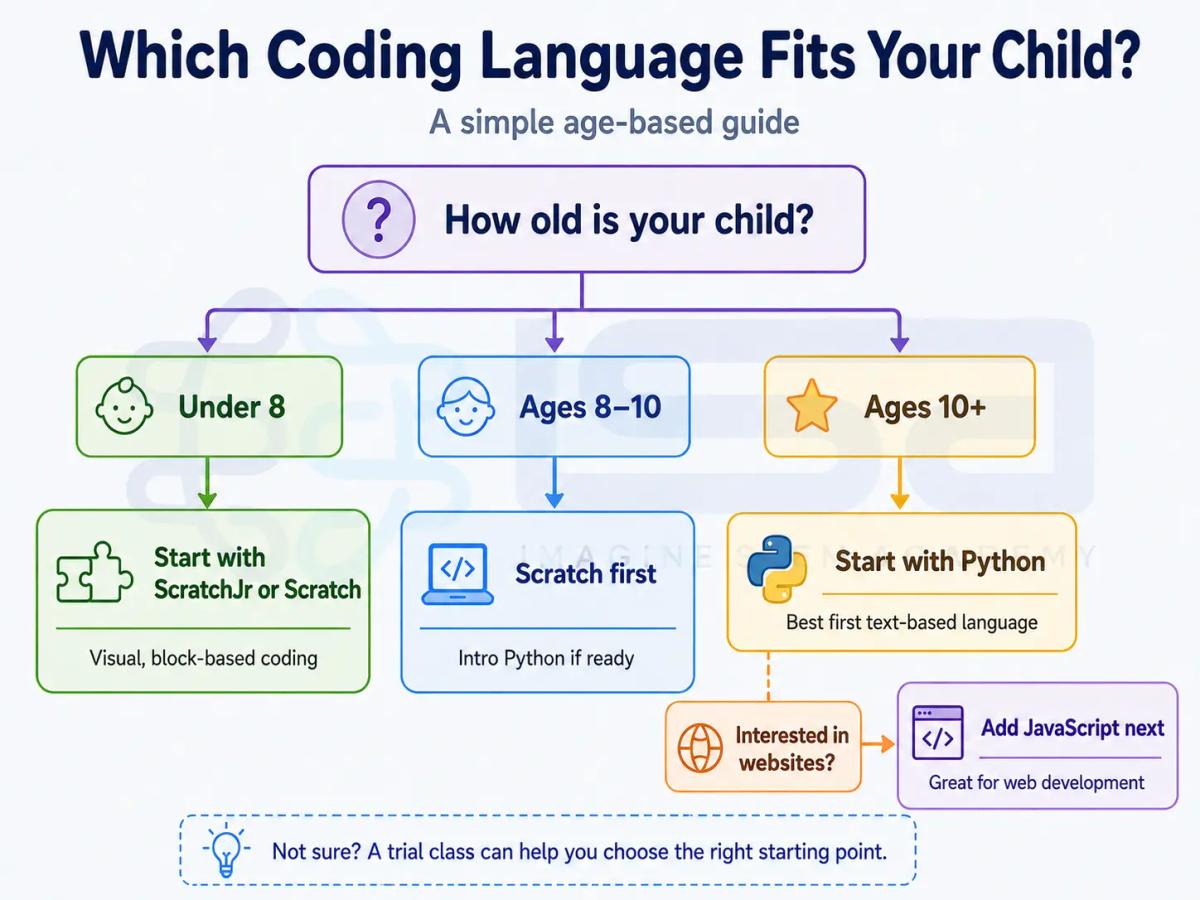
- Ages 5–7: Start with ScratchJr or Scratch — visual, block-based, no typing required.
- Ages 8–10: Scratch (more advanced projects) or an early introduction to Python for kids who are ready.
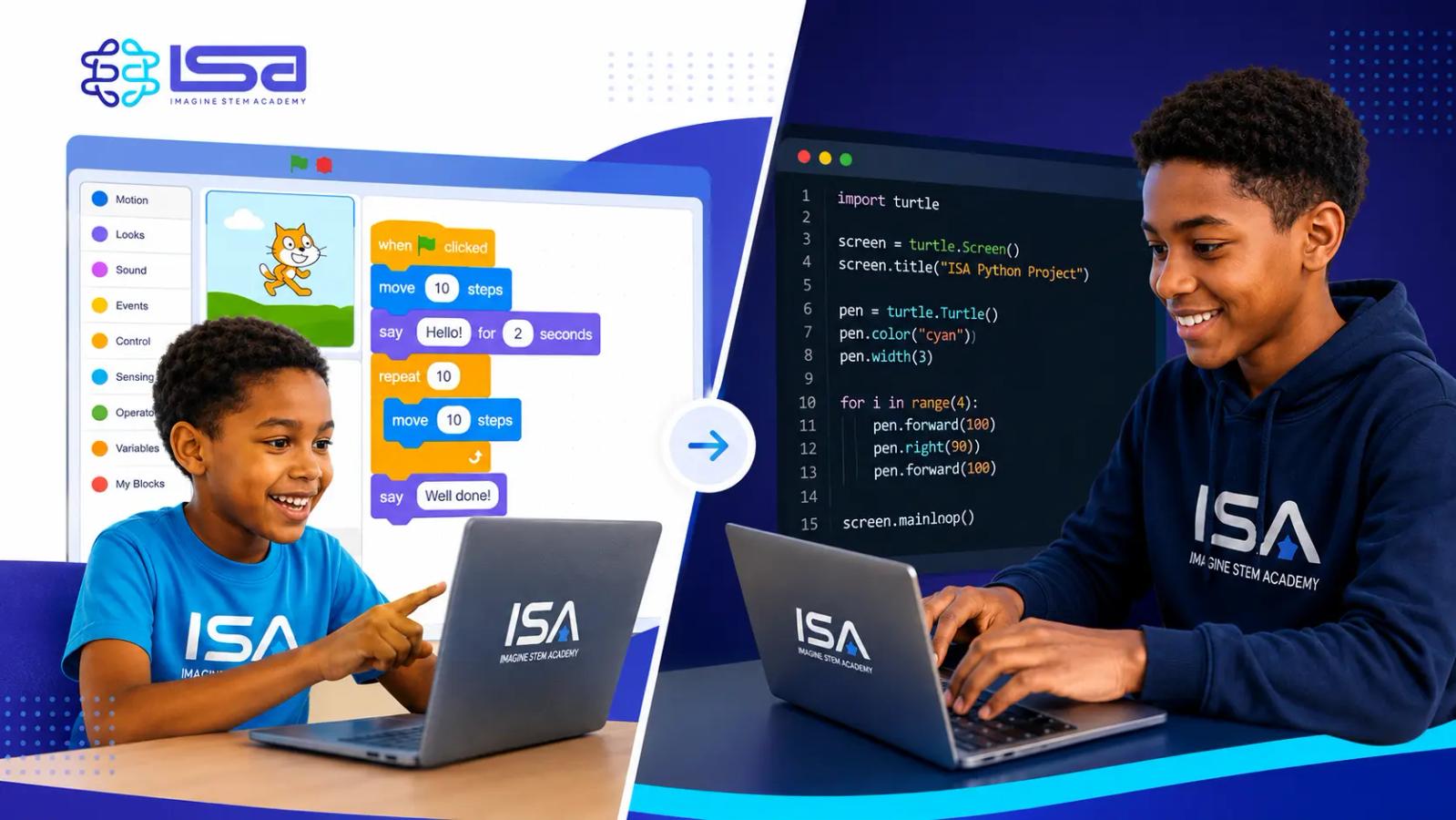
- Ages 10+: Python is the standard next step — real, text-based code, still approachable for beginners.
- Ages 13+: Python remains solid, with room to branch into JavaScript (web-focused) or game-development-specific tools depending on interest.
The rest of this guide explains why, in more detail.
Scratch & ScratchJr: The Right Starting Point for Younger Kids
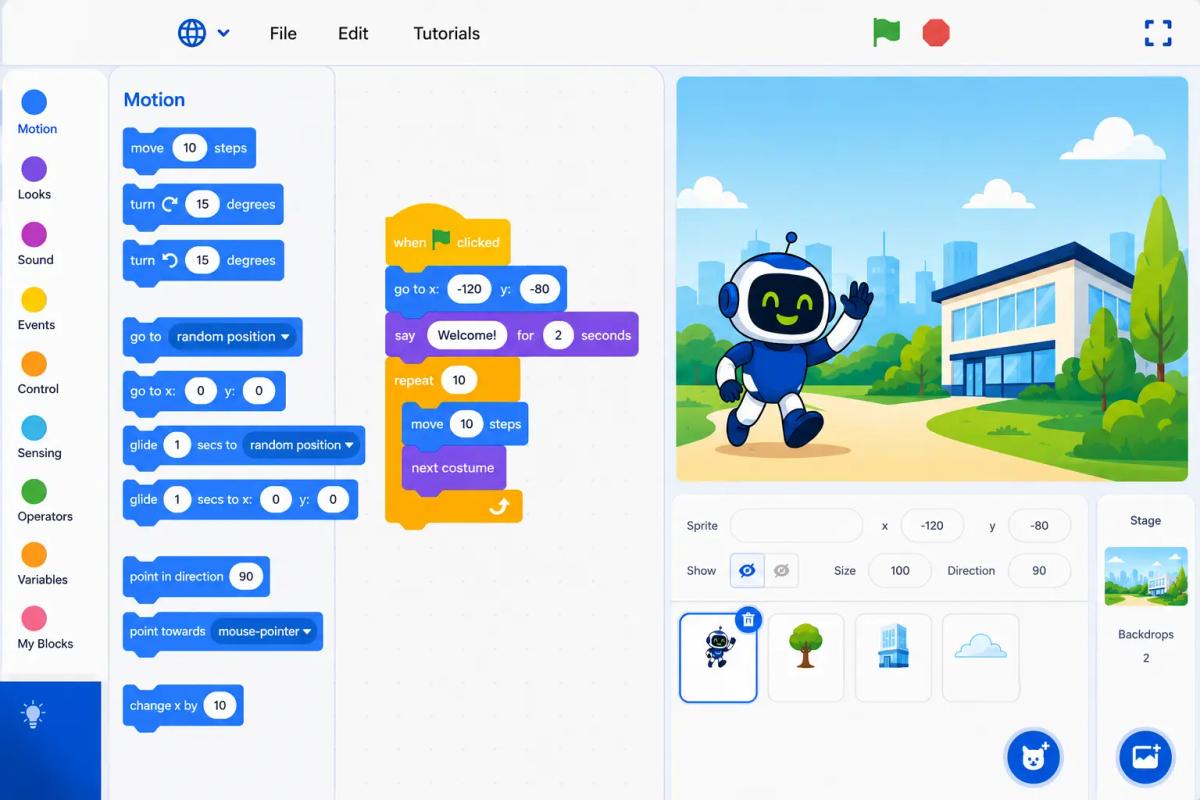
Scratch (developed by MIT) is a block-based, visual programming language — instead of typing lines of code, kids drag and snap together colorful instruction blocks, like puzzle pieces, to make characters move, build games, or tell animated stories.
Best for: ages 5–10, complete beginners of any age Why it works: removes the biggest early barrier to coding — precise typed syntax — while still teaching the real underlying logic: sequencing, loops, conditionals ("if this happens, then that happens"), and variables. ScratchJr specifically is a simplified version designed for ages 5–7, tablet-friendly and reading-optional, making it the natural first step for the youngest beginners.
Python: The Standard Next Step
Python is a text-based programming language — real code, typed rather than dragged — and it's widely considered the best first "real" language for kids and teens, for a few clear reasons:
- Readable syntax. Python is often described as one of the closest programming languages to plain English, which makes early mistakes easier to spot and fix.
- Genuinely useful. Python is used professionally in web development, data science, AI, and automation — kids aren't learning a "toy" language, they're starting on something with real-world relevance.
- Wide project range. From simple games and chatbots to automation scripts, Python supports a huge range of beginner-friendly projects, which helps keep kids engaged as they progress.
Best for: most kids aged 10+, and motivated younger kids (8–9) who've outgrown Scratch's ceiling.
JavaScript: Worth Knowing About, Usually a Second Language
JavaScript powers most interactive websites, which makes it appealing to older kids and teens interested specifically in web development. It's a reasonable next step after Python for a teen who wants to build websites or web apps, but it's a less forgiving starting language than Python for complete beginners — better as a second language than a first.
What About Java or Lua?
You may see these mentioned in other guides, but they're generally not the best starting point for kids. Java has a steeper learning curve with more rigid syntax rules that tend to frustrate beginners, and Lua is mostly used in specific contexts like game modding (e.g., Roblox scripting) rather than as a general first language. Neither is wrong to learn eventually, but starting here usually means a harder, less rewarding introduction to coding than Scratch or Python would give.
See which track fits your child's age — book a free trial class →
How to Choose: A Quick Decision Guide
- Under 8, or completely new to coding at any age? Start with Scratch or ScratchJr.
- 8–10 and comfortable with Scratch already? Consider introducing Python gradually.
- 10 or older? Python is the standard, strong starting point.
- Specifically interested in building websites? Python first, then JavaScript.
- Not sure? A free trial class is the fastest way to find out — a good instructor will quickly spot the right starting point based on how your child responds.
Frequently Asked Questions
What coding language should my 7-year-old learn first? Scratch or ScratchJr — both are visual, block-based tools designed specifically for this age, with no typing or complex syntax required.
Is Python too hard for kids? No — Python is widely considered one of the most beginner-friendly text-based languages, thanks to its readable, close-to-plain-English syntax. Most kids aged 10+ can start comfortably, and some motivated 8–9 year olds are ready too.
Should my child learn Scratch before Python? Generally yes, if they're under 10. Scratch builds the core logical thinking behind coding without the added challenge of typed syntax, which makes the eventual move to Python smoother.
Is JavaScript a good first language for kids? It's usually better as a second language, after Python. JavaScript is powerful for web development but less forgiving for absolute beginners than Python.
Do you teach both Scratch and Python? Yes — our programs are structured by age, moving from Scratch-based learning for younger beginners through to Python as children progress.
Book Your Child's Free Trial Coding Class